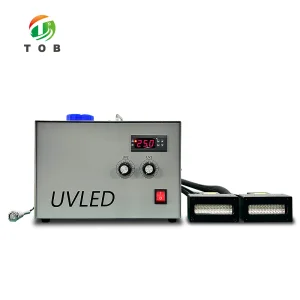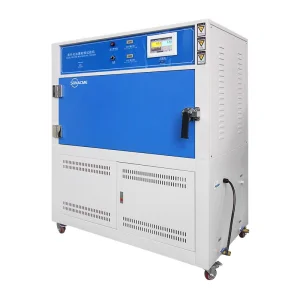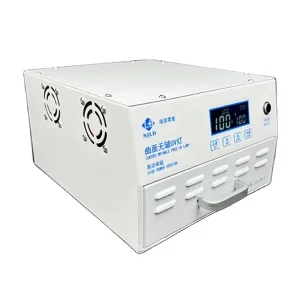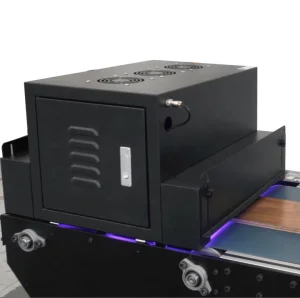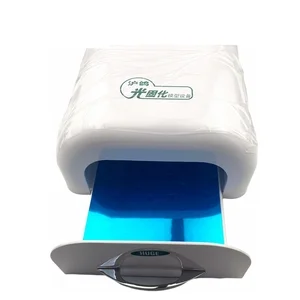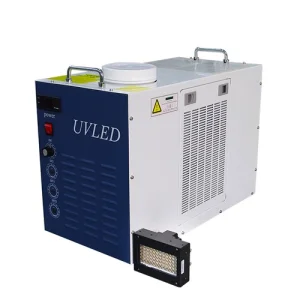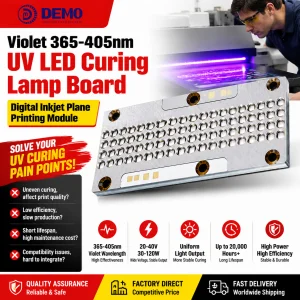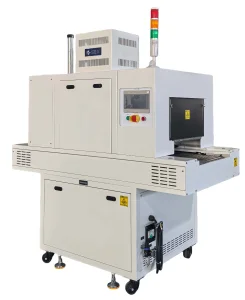
Understanding the shift from traditional mercury arc lamps to solid-state UV LED technology for precision bonding, electronics, printing, and coatings.
The industrial manufacturing sector is experiencing an accelerated transition toward solid-state technology. At the center of this shift is the UV LED curing system, which has revolutionized assembly lines, high-speed commercial printing, and semiconductor packaging. As global production hubs strive to achieve climate neutrality and reduce operational overheads, traditional mercury-vapor systems are being phased out in favor of narrow-band semiconductor light sources. This whitepaper provides a comprehensive technical breakdown of modern industrial UV curing technology, highlighting production engineering, procurement standards, and structural advantages within the global supply chain.
Unlike traditional gas-discharge mercury lamps that emit a broad spectrum of UV, visible, and infrared light (resulting in significant thermal energy transfer to the substrate), a UV LED curing system utilizes light-emitting diodes to generate monochromatic light at precise peak wavelengths, typically 365nm, 385nm, 395nm, or 405nm. This specific focus directly targets the absorption profile of photopolymerizable initiators in adhesives, inks, and protective coatings.
The efficiency of the curing process is determined by two critical parameters: Peak Irradiance (measured in W/cm²) and Energy Density/Dose (measured in J/m² or J/cm²). The irradiance determines the system's ability to overcome oxygen inhibition, which often compromises surface curing. Concurrently, the energy density ensures that the photon density is sufficient to induce complete deep-layer polymerization through thick or heavily pigmented coatings. Selecting a system requires balancing these two parameters according to the formulation chemistry of the chemistry supplier.
Short-wave UV radiation (e.g., UVC, 200–280nm) is highly effective for surface curing but suffers from poor penetration. Longer wavelengths (e.g., UVA, 365–405nm) penetrate deeply into thick coatings and filled polymers. UV LED curing systems typically operate in the UVA band, providing superior cross-linking profiles inside industrial resins without releasing ozone or generating excess heat.
A common misconception is that UV LEDs do not generate heat. While they emit virtually zero infrared radiation toward the curing target, they generate significant heat internally at the semiconductor junction. Proper junction temperature maintenance is critical for extending the lifetime of the LED elements beyond 20,000 hours and preventing wavelength drift.
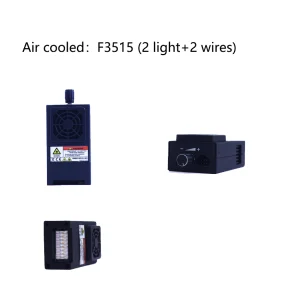
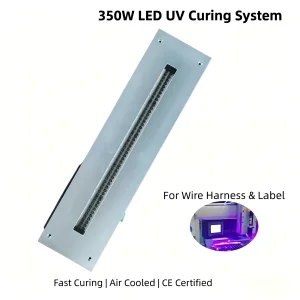
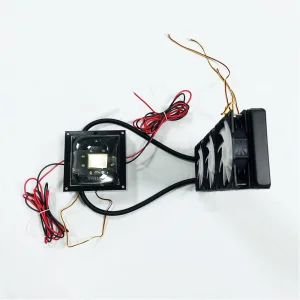
These systems use high-airflow fans mounted directly to micro-fin heat sinks. They are ideal for applications with space restrictions or where external liquid piping is impractical. Air-cooling is generally suitable for low-to-medium irradiance curing runs where the thermal load is manageable.
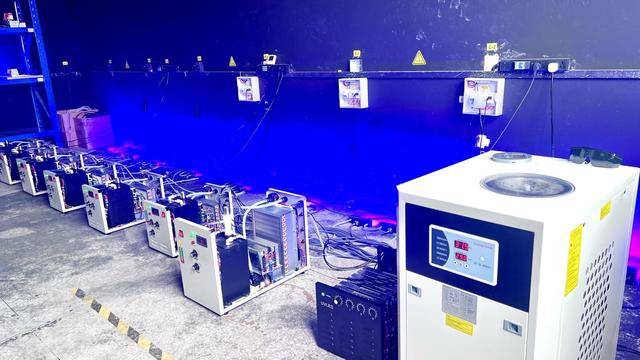
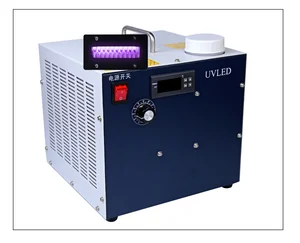
Utilizing closed-loop water chillers, these configurations route coolant directly through micro-channels within the COB (Chip-on-Board) substrate. Water-cooling is necessary for high-power systems (e.g., >16 W/cm² or heavy-duty industrial printers) to ensure thermal stability and maintain output uniformity of ≥85%.
China's industrial manufacturing hubs, particularly the Dongguan-Shenzhen cluster, lead the world in the production and integration of industrial UV LED curing systems. This geographic concentration of optical engineering, semiconductor packaging, and precision metal fabrication creates a highly efficient manufacturing ecosystem.
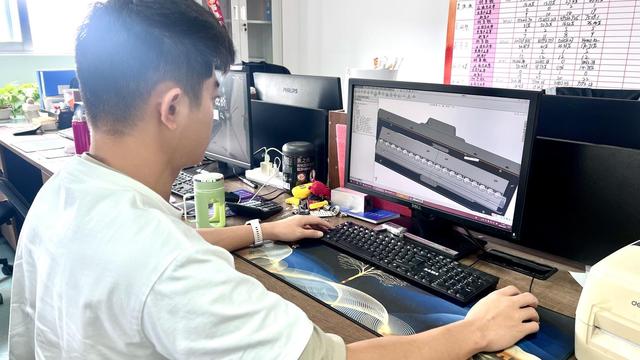
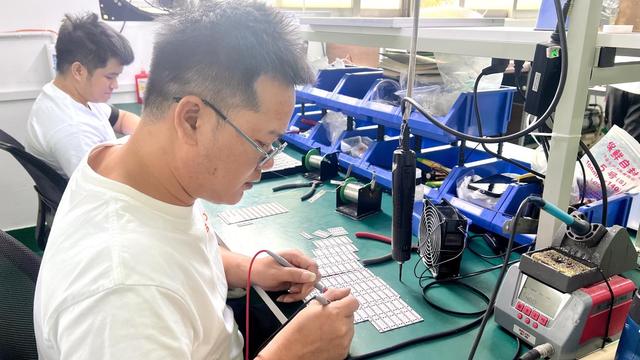
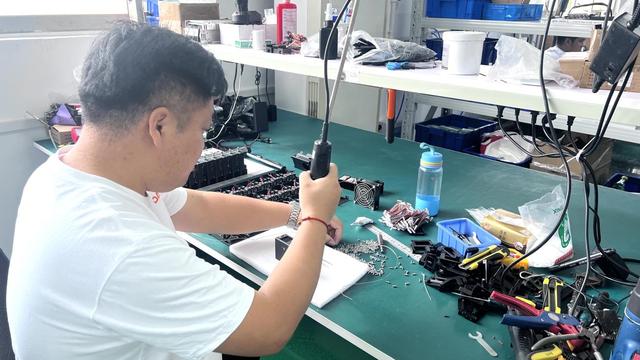
Manufacturers like Dongguan LumiCure Light Co., Ltd. leverage this localized supply chain to procure high-grade LED dies (e.g., Seoul Viosys, San'an Optoelectronics) and integrate them into custom Chip-on-Board (COB) packages. This vertical integration reduces logistics overhead, minimizes lead times, and allows for rapid prototyping of custom mechanical and optical assemblies.
Furthermore, the domestic electronics ecosystem provides access to advanced components (e.g., driver ICs, custom power supplies) at lower cost scales than those available in Western markets. This allows Chinese manufacturers to offer customized, high-reliability curing systems at highly competitive price points.
How engineering procurement departments evaluate and qualify UV LED equipment for automated assembly lines.
When selecting a UV LED system manufacturer, industrial procurement teams must assess several parameters to ensure long-term compatibility, reliability, and regulatory compliance within their production environments.
Modern manufacturing demands complete automation integration. UV curing units must interface directly with industrial programmable logic controllers (PLCs) via protocols such as RS485, Modbus, EtherCAT, or analog 0-10V control lines. Procured systems must support remote triggering, precise analog dimming (10% to 100% power scaling), and provide real-time telemetry, including thermal warnings, LED failure alerts, and operational run-time logging.
Global shipping and high-volume manufacturing require compliance with international safety and environmental regulations. Industrial UV LED units must carry valid CE (Conformité Européenne), RoHS (Restriction of Hazardous Substances), and UL certification marks. Because UV LED systems do not use mercury, they are free from the restrictions of the Minamata Convention on Mercury. This simplifies compliance under REACH regulations and minimizes environmental disposal costs.
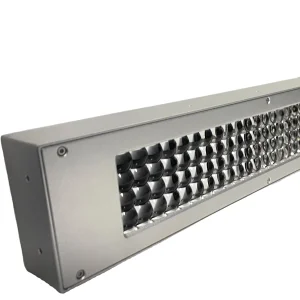
For wide-format printing, roll-to-roll web converting, or optical bonding (LOCA), the uniformity of light distribution is critical to avoid uneven curing, which can cause substrate warpage or adhesive failure. Procurement specifications typically require a minimum of ≥85% uniformity across the defined irradiation area. Manufacturers must employ advanced ray-tracing simulations and customize micro-lens arrays to direct energy precisely onto the target substrate.
Practical scenarios demonstrating the integration of high-performance curing systems in diverse industrial sectors.
UV LED curing systems are deployed across various industries, each demanding distinct wavelength configurations, physical form factors, and power output parameters.
In touchscreen and micro-display manufacturing, liquid optically clear adhesives (LOCA) require precise, low-heat curing to prevent stress-induced optical distortion. Focused spot-curing heads at 365nm deliver high-intensity UV energy directly to bond lines without exposing sensitive OLED or LCD panels to damaging thermal radiation.
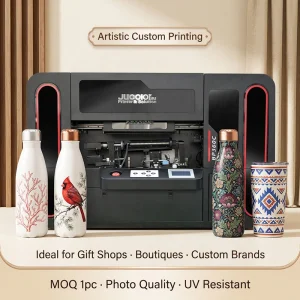
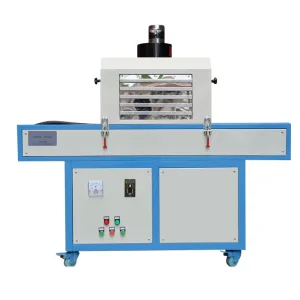
Single-pass inkjet, offset, and flexographic printing presses rely on inline linear UV LED arrays (typically 395nm or 405nm) to instantly dry inks on plastic films, labels, and metal foils. This immediate cure prevents ink bleeding, allowing presses to operate at speeds exceeding 150 meters per minute.
From polycarbonate headlight assemblies to interior wood veneers, UV-curable hardcoats offer scratch and chemical resistance. Multi-angle UV LED gantries provide uniform exposure across complex 3D geometries, ensuring complete curing over the entire surface.
Catheters, syringes, and hearing aids require fast, repeatable bonding that meets ISO 10993 biocompatibility standards. UV LED spot and flood curing units provide highly repeatable light delivery, ensuring each bond line is fully polymerized for patient safety.
Emerging technologies that will shape the next generation of industrial photopolymerization.
The UV LED curing sector continues to evolve, driven by advancements in semiconductor physics and material science. Key trends shaping the future of this industry include:
To overcome the limits of narrow-band spectral emission, manufacturers are developing hybrid systems that combine different wavelengths (e.g., 365nm + 395nm + 405nm) within a single COB array. This combination targets both surface initiators and deep-cure sensitizers simultaneously, providing a faster and more thorough cure for complex ink and adhesive formulations.
Micro-LED technology allows for extremely dense packaging of LED junctions, enabling the fabrication of pixelated curing arrays. These systems can selectively project UV light onto specific shapes or zones, minimizing wasted energy and reducing thermal exposure on unbonded portions of the assembly.
Future UV curing systems will increasingly incorporate optical sensors and AI diagnostics. Real-time irradiance sensors will monitor degradation and automatically adjust power output to maintain a constant UV dose, reducing maintenance downtime and improving quality control.
Direct answers to common engineering questions regarding the adoption, operation, and maintenance of UV LED Curing Systems.
365nm is a shorter wavelength that delivers high energy at the surface, making it ideal for clear varnishes, thin coatings, and surface-bonding adhesives. However, it can struggle to penetrate pigmented or thick materials. 395nm (and 405nm) features a longer wavelength that penetrates more deeply into thick, pigmented, or filled materials, making it the industry standard for thick adhesives, screen printing inks, and wood coatings.
Traditional mercury lamps require continuous power to stay hot, drawing full power even during line stoppages or when no product is underneath. They also lose significant energy to unused infrared and visible wavelengths. In contrast, UV LED systems feature instant on/off capability, drawing power only when curing. They also convert electrical energy directly into the specific UV wavelength required, eliminating wasted heat energy.
No. Tap water contains dissolved minerals that can precipitate out under thermal stress, scaling the internal micro-channels of the LED copper substrate and causing cooling failure. We recommend using distilled or deionized water combined with a compatible corrosion inhibitor. This prevents scaling, algae growth, and galvanic corrosion inside the cooling loop.
For European markets, CE marking and RoHS compliance are mandatory. For North American markets, UL (Underwriters Laboratories) or CSA certification is generally required for electrical equipment. Because UV LEDs do not contain mercury, they are exempt from many of the hazardous waste disposal regulations applied to traditional gas-discharge lamps.
Yes. Leading manufacturers like Dongguan LumiCure Light Co., Ltd. offer extensive OEM/ODM support. This includes custom COB configurations, specialized optical lens designs for focused or collimated beams, and custom enclosures to fit within the physical constraints of existing production lines.
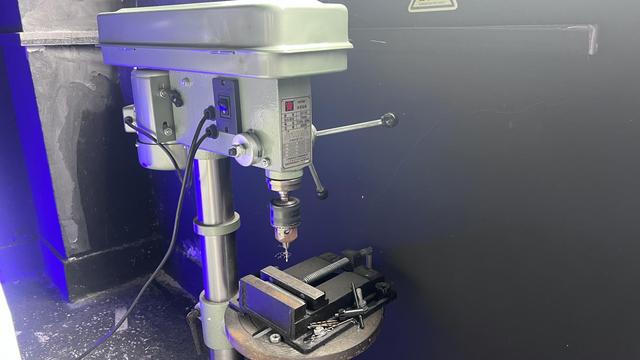
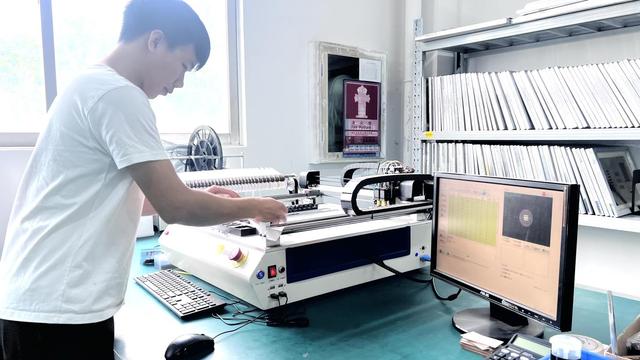
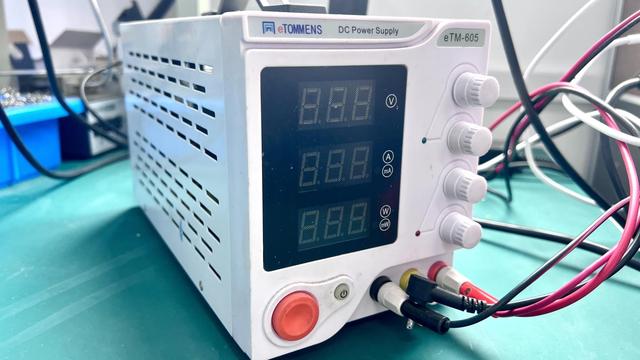
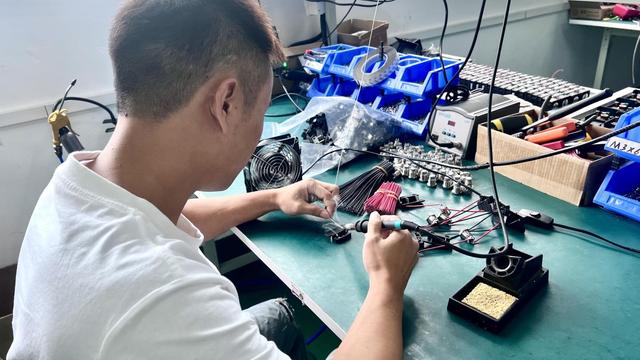
A premier manufacturer specializing in the development, production, and supply of industrial UV curing systems. Backed by an experienced engineering team and advanced cleanroom facilities, we deliver high-efficiency, energy-saving, and customizable UV LED solutions to global partners.
 LumiCure Light