LumiCure Light
Global Industrial Landscape of UV LED Technology
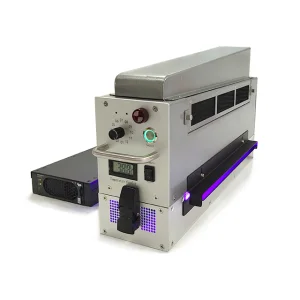
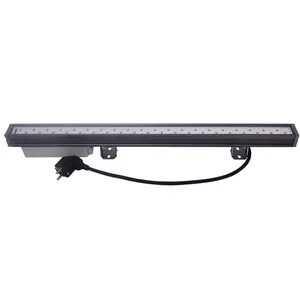
The industrial landscape is undergoing a massive transformation as solid-state UV LED systems systematically replace conventional medium-pressure mercury arc lamps. Traditional mercury systems are held back by their extensive heat generation, long warm-up cycles, mercury pollution hazards, and brief operational lifespans of roughly 1,000 to 2,000 hours. In contrast, modern UV LED curing technology delivers upward of 20,000 hours of stable output. Because LEDs run cool and emit a narrow spectral bandwidth, they can safely process thin, heat-sensitive plastics without warping or burning them.
This technology shift is accelerated by global environmental mandates, such as the Minamata Convention on Mercury. These agreements push industries to eliminate toxic components from their manufacturing lines. In printing, semiconductor, and medical applications, companies are upgrading to narrow-spectrum UV LEDs (primarily 365nm, 385nm, 395nm, and 405nm). By targeting specific wavelengths, factories can cure inks, coatings, and adhesives instantly. This focused approach reduces overall energy usage by up to 70% and helps operators meet strict environmental, safety, and health guidelines.
Targeted Wavelength Engineering: Wavelength-Specific Solid State Curing
Understanding wavelength selection is critical for industrial process design. Specific photochemical systems require exact spectral matches to cure correctly:
- 365nm Wavelength: The industry standard for surface curing, optical bonding, and shadowless adhesive applications. Excellent for glass-to-metal bonding and thin coatings because it cures surface layers quickly.
- 385nm & 395nm Wavelengths: Offering deeper penetration profiles, these wavelengths are ideal for thick ink layers in flexographic, screen, and offset printing. They cure the base layer thoroughly, ensuring the print bonds firmly to the substrate.
- 405nm Wavelength: Often combined with 365nm or used alone for deep resin curing in 3D printing and PCB solder mask applications. This range minimizes light scattering for cleaner, sharper lines.
- 293nm - 295nm (UVB): Specialty wavelengths used in medical and photomedicine configurations, including synthesis research, targeted vitamin D synthesis, and precise chemical processes.