High-performance industrial equipment configured for maximum irradiance, stability, and integration efficiency.
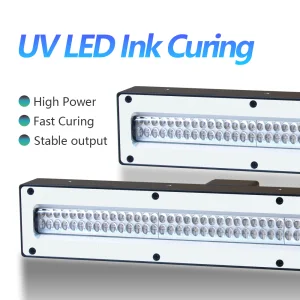
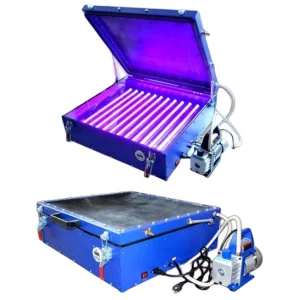
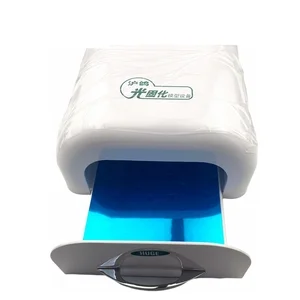
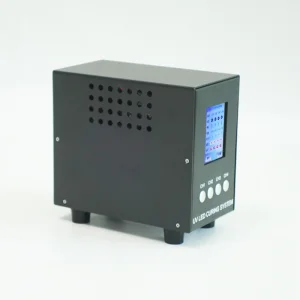
Dongguan LumiCure Light Co., Ltd. is a professional China UV LED curing lamp manufacturer specializing in the research, development, production, and supply of industrial UV curing systems and customized UV LED solutions. With a strong focus on innovation, quality, and customer satisfaction, LumiCure has become a trusted partner for manufacturers worldwide seeking efficient and reliable curing technologies.
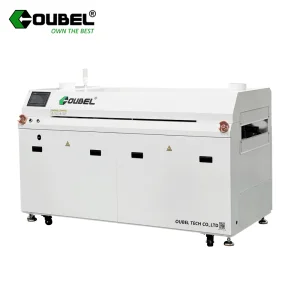
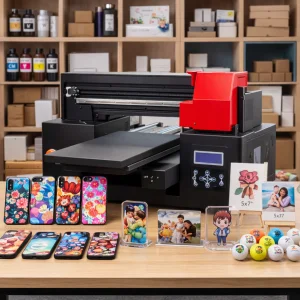
Our product range includes UV LED curing lamps, UV LED spot curing systems, flood curing lamps, conveyor UV curing machines, UV LED modules, printing curing systems, adhesive curing equipment, and customized industrial UV solutions. These products are widely applied in printing, electronics assembly, semiconductor packaging, optical bonding, automotive manufacturing, medical devices, 3D printing, and various precision industrial processes.
Backed by an experienced engineering team and advanced manufacturing facilities, LumiCure is committed to developing energy-saving and environmentally friendly UV curing technologies. Our products feature high curing efficiency, precise wavelength output, long service life, low maintenance requirements, and intelligent control capabilities, helping customers improve productivity while reducing operating costs.
Quality remains the foundation of our business. Every product undergoes rigorous testing and strict quality control procedures throughout the manufacturing process to ensure consistent performance and reliability. We also provide comprehensive OEM and ODM services, enabling customers to customize products according to their specific technical and application requirements. Serving clients across Europe, North America, Asia, the Middle East, and other global markets, Dongguan LumiCure Light Co., Ltd. continues to deliver innovative UV LED curing solutions that support sustainable and efficient industrial manufacturing.
Why optoelectronic calibration, advanced thermodynamic structures, and spectral precision determine operational ROI.
Integrating high-density semiconductor chip configurations directly onto metal-core printed circuit boards (MCPCBs) reduces thermal resistance path, optimizing optical power density output up to 24W/cm².
Incorporating microchannel liquid-cooling and copper-finned heat pipe assemblies prevents diode overheating, maintaining peak junction temperatures below 65°C to secure consistent spectral output.
Designed with fused quartz and high-transmittance optical silica lenses to control beam divergence angles, concentrating UV photons directly onto target surfaces for faster polymer reaction rates.
Note on Spectral Precision: Industrial formulations are chemical-wavelength dependent. By manufacturing narrow spectral bands (FWHM ± 5nm) at 365nm, 385nm, 395nm, and 405nm, LumiCure ensures matching overlap with photoinitiators to maximize cross-linking density without introducing thermal stress to substrates.
Inside our Dongguan facility: where ISO 9001 production meets rigorous industrial testing standards.
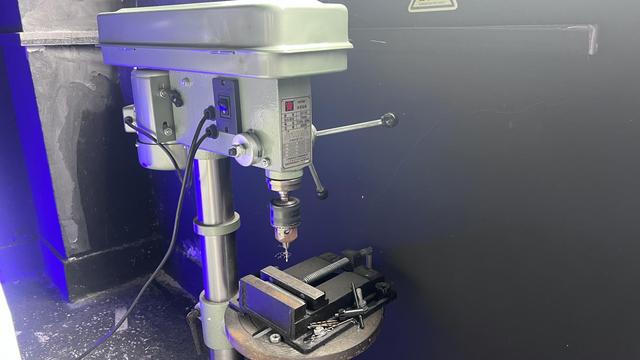
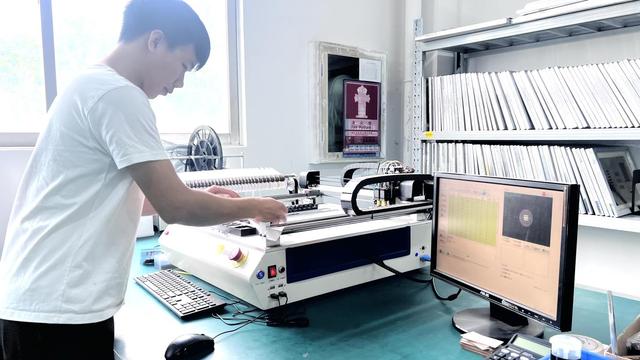
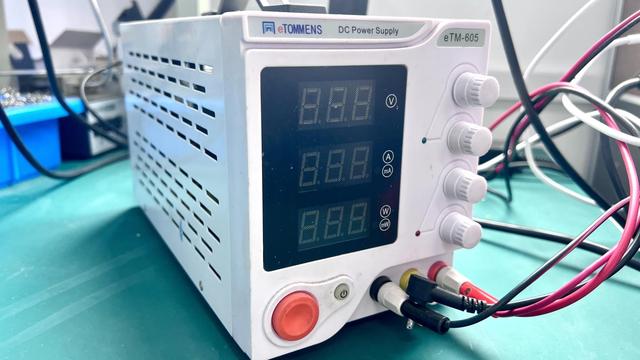
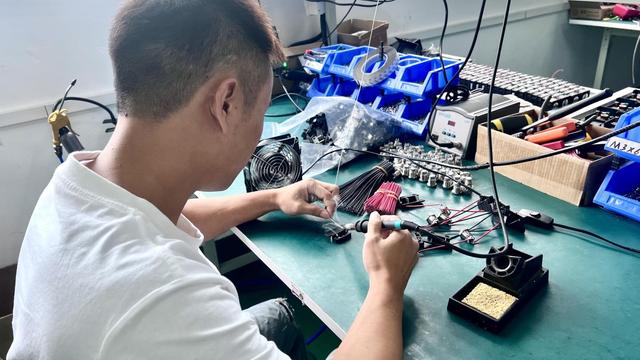
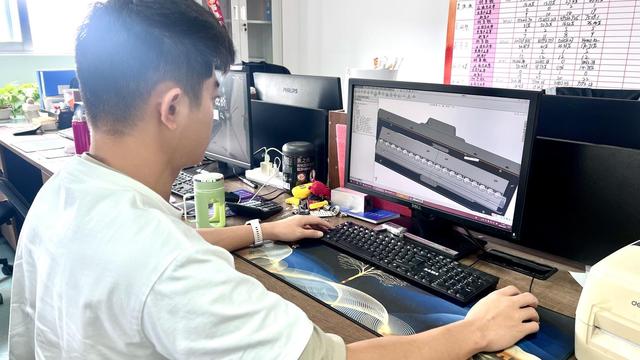
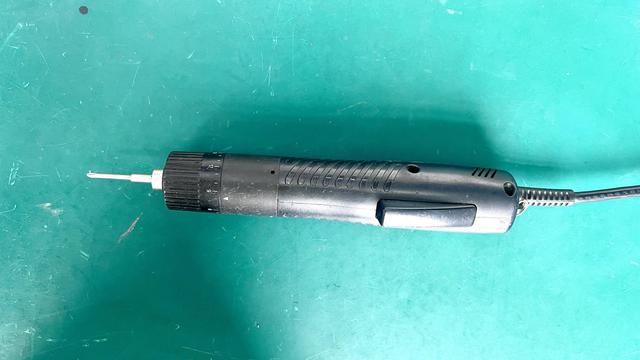
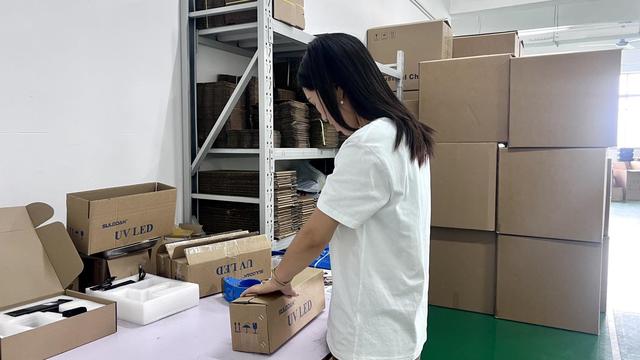
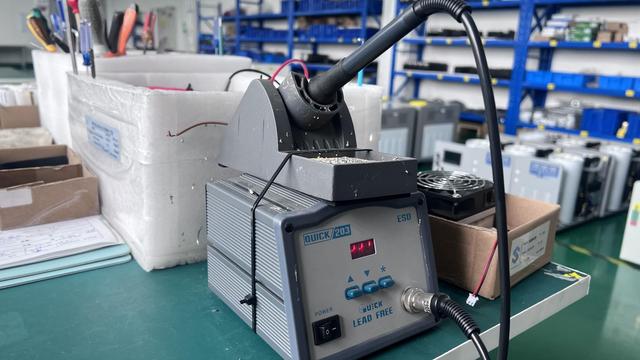
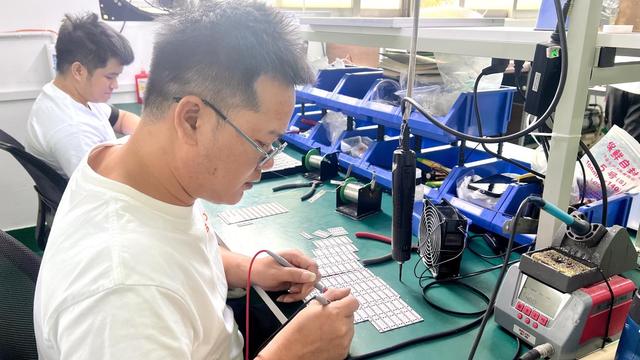
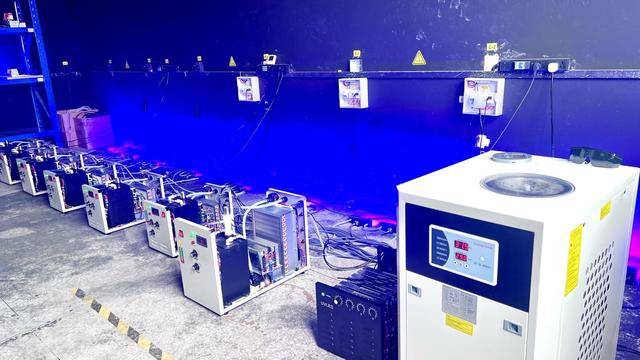
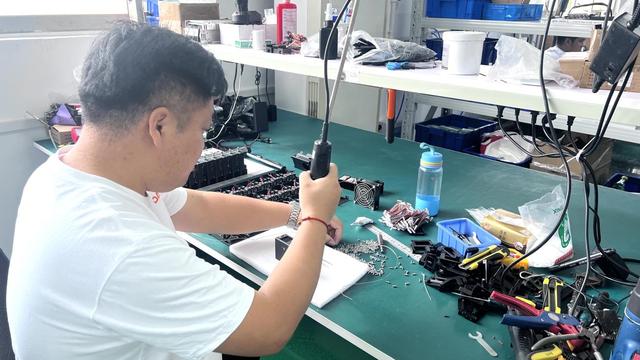
Integrating state-of-the-art solid-state UV technology to replace aging mercury lamps and resolve complex production bottlenecks.
In wafer dicing, substrate bonding, and PCB coating processes, thermal load must be minimized. Our low-heat, high-intensity spot and flood curing configurations cure UV-resins, screen inks, and adhesive chemistries within milliseconds, protecting micro-circuit components from excessive heat cycles.
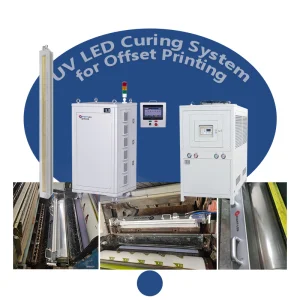
Replacing traditional ozone-generating lamps with high-power 395nm and 385nm modules on multi-color offset and flexographic printing presses. Enables immediate drying of thick ink films at conveyor speeds exceeding 200m/min, eliminating paper shrinkage and improving print dot definition.
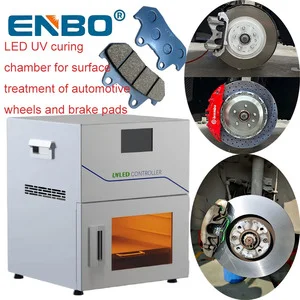
From glass bonding to curing wear-resistant clear coats on brake pads, automotive sub-assemblies demand high mechanical reliability. Our customizable modular configurations adapt to irregular surface profiles to deliver uniform spatial irradiance.
Targeted medical photomedicine arrays operating within UVB regions (e.g., 311nm for skin treatment) and industrial disinfection barriers using high-efficiency UVC LED chips. Clean, chemical-free pathogen neutralization designed for farm water lines and sterile cold chain lines.
Essential answers to critical engineering and logistical questions for global sourcing managers.
Peak irradiance represents the maximum intensity of photons hitting a unit of surface area, which determines depth of cure and penetration. Energy density (dose) is the integration of irradiance over time. High-speed lines require high peak irradiance to initiate photopolymerization, whereas complete chemical cross-linking relies on sufficient cumulative dose.
Liquid cooling is necessary for high-power installations (typically above 8-12 W/cm² or total footprint systems >500mm long) and cleanroom environments where air turbulence could introduce dust particles. Air cooling is suitable for compact assemblies, laboratory curing boxes, and low-duty-cycle processes due to its lower installation and maintenance overhead.
Yes. Because mercury lamps emit a broad spectrum (including shortwave UVC for surface cure and longwave UVA for deep cure), transitioning print lines can benefit from a hybrid setup. The UV LED provides highly efficient deep cure, while a low-power mercury lamp or a specialized shortwave LED tackles surface oxygen inhibition, yielding superior adhesion profiles.
Every batch of LEDs is binned within precise ±2nm tolerances. During the COB assembly stage, mapping algorithms place chips according to their forward voltage and optical output power. The array is then paired with micro-lenses designed using Monte Carlo optical ray-tracing software to project flat-top light distributions.
Systems are equipped with temperature sensor lines (NTC/PT100) on the copper substrate, fluid flow sensors for water lines, and light-leak interlocks. These sensors feed data back to our smart driver cabinets, shutting down the power supply within 10 milliseconds if thermal or optical deviation is detected.
Yes, all standard systems carry CE and RoHS compliance certifications. As UV LED technology produces zero ozone and contains no toxic mercury, using our products helps facilities transition towards compliance with the Minamata Convention on Mercury and localized EPA/ISO environmental mandates.
Standard custom projects take 3–5 weeks. This includes optomechanical design, optical ray-tracing, thermal simulation, CNC custom housing milling, PCB fabrication, cleanroom assembly, and a mandatory 72-hour burn-in stress test before dispatch.
We offer full DDP, CIF, and FOB shipping terms utilizing global air cargo carriers (DHL, FedEx, UPS) and container shipping lines. All shipments are packed in heavy-duty, moisture-sealed, anti-static wooden crates with integrated shock monitors to ensure optical components arrive undamaged.
We back our industrial curing lines with a standard 1 to 2-year warranty depending on configuration. In the rare event of a component issue, we maintain a dedicated supply of modular replacement drivers and LED boards that can be hot-swapped by on-site technicians with support from our remote engineering team.
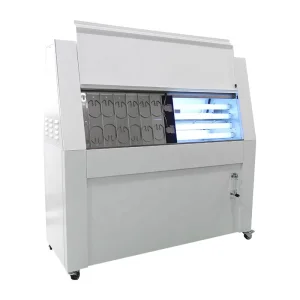
Yes. We supply specialized laboratory equipment, such as our programmable UV light accelerated weathering chambers and benchtop UV ovens. This allows process engineers to run material aging, degradation, and cross-linking validation tests under controlled cycle parameters before scaling production.
Customizable components, light engines, and laboratory test chambers to complete your industrial UV infrastructure.
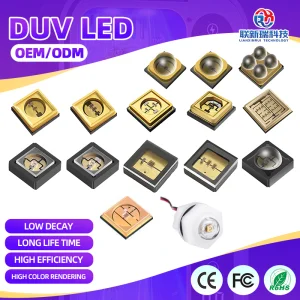
 LumiCure Light